

INTRODUCTION
Starting an internship is an important step for students and freshers who want to gain practical experience and build their careers. An internship can help you understand how a professional workplace works, improve your skills, and give you an opportunity to apply what you have learned in college or through courses.
However, before getting an internship, most students have to attend an interview. For students attending their first interview, it is normal to feel nervous and have many questions. One of the most common questions is, “How long is an internship interview?”
The answer depends on the company, internship role, interview format, and recruitment process. Some internship interviews may take only 15 to 20 minutes, while others may take 30 to 60 minutes or longer. Technical and specialized internships may require more time because the interviewer may ask additional questions or conduct practical assessments.
Knowing what to expect before, during, and after an internship interview can make the process easier. With proper preparation, students can attend interviews with more confidence and communicate their skills clearly.
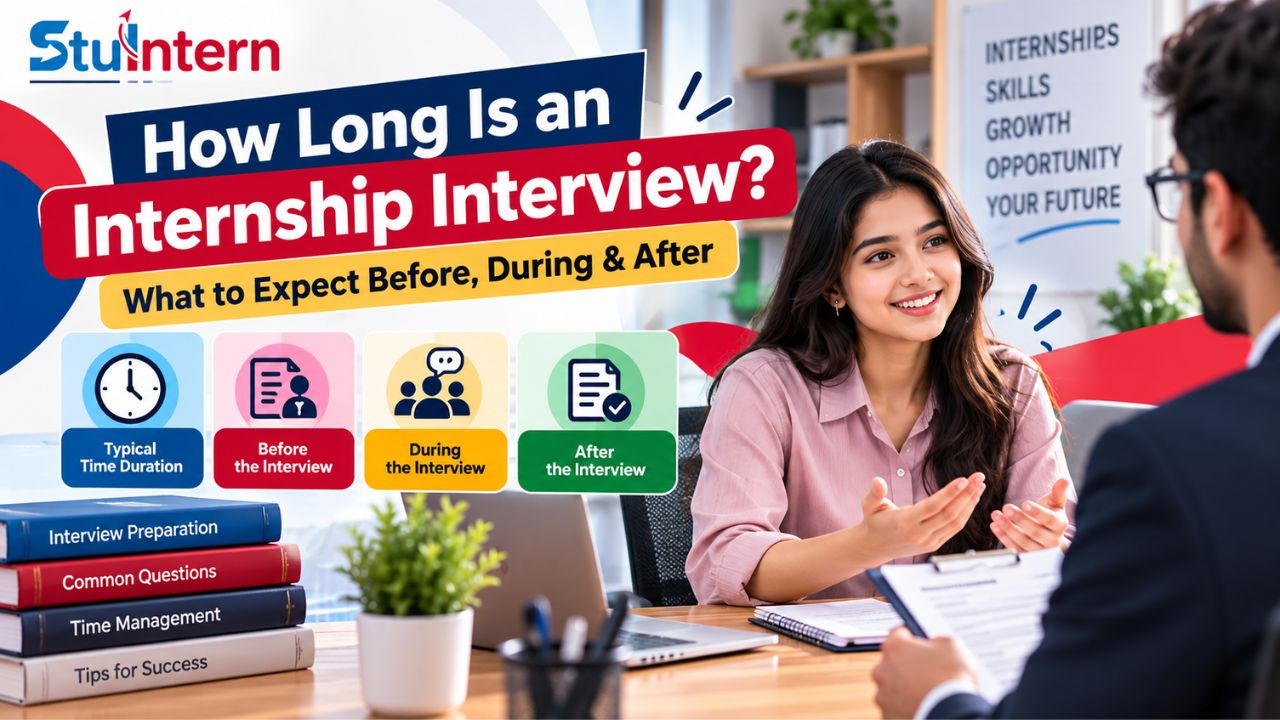
How Long Is an Internship Interview?
There is no fixed time for an internship interview. In many cases, an individual internship interview may last between 15 and 45 minutes. However, the actual duration can be shorter or longer depending on the company and position.
Here is a general idea of how long different types of internship interviews may take:
- Phone screening: 10–20 minutes
- HR interview: 20–30 minutes
- Online or video interview: 20–45 minutes
- Technical interview: 30–60 minutes or more
- Final interview: 30–60 minutes
- Panel interview: 30–60 minutes or more
These are only general time ranges. Every company has its own interview process, so students should not worry if their interview lasts longer or shorter than these estimates.
For example, a recruiter may only need 15 minutes to understand a student's basic qualifications and interest in the internship. Another company may need 45 minutes to discuss projects, technical skills, career goals, and role responsibilities.
Most importantly, the length of an internship interview does not automatically determine the result. A short interview does not always mean something went wrong, and a long interview does not guarantee selection.
Why Does Internship Interview Duration Vary?
There are several reasons why internship interviews can have different durations.
Type of Internship
The type of internship is one of the most important factors.
For example, a digital marketing internship may include questions about SEO, social media, content writing, Google Ads, analytics, and communication skills. A software development internship may include programming questions, coding problems, technical concepts, and project discussions.
Similarly, internships in finance, data science, engineering, research, management, healthcare, and other fields may require different types of questions.
Company Hiring Process
Every company has its own recruitment process. Some companies may select interns after one interview, while others may conduct several rounds.
A recruitment process could include:
Application → Resume Screening → HR Interview → Technical Interview → Final Interview → Selection
If a company has several rounds, the overall hiring process may take more time, even though each individual interview may not be very long.
Interview Format
The interview format can also affect the duration.
A phone screening is usually focused on basic information, while an online or face-to-face interview may involve a more detailed discussion.
A panel interview can also take longer because several people may ask questions.
Technical Requirements
Technical internships often require additional evaluation. A company hiring a software development intern may ask coding questions, while a data science company may ask questions related to statistics, Python, data analysis, or machine learning.
Some companies may also provide a practical task or assessment.
Number of Interviewers
A one-to-one interview may be completed quickly. However, when several interviewers are involved, the conversation may take longer because each person may ask questions related to a different area.
What to Expect Before an Internship Interview
Good preparation begins before the interview. Students who prepare properly are usually better able to answer questions and explain their skills.
Research the Company
Before attending an internship interview, spend some time learning about the company.
Understand:
- What the company does
- Its products or services
- Its industry
- The internship position
- The skills required
- The type of work involved
Company research is useful because interviewers may ask questions such as, “Why do you want to join our company?” or “Why are you interested in this internship?”
A basic understanding of the company can help you provide more relevant answers.
Understand the Internship Description
Read the internship description carefully.
Look for information about:
- Responsibilities
- Required skills
- Educational qualifications
- Tools or software
- Working hours
- Projects
- Learning opportunities
Try to connect the requirements with your own skills and academic experience.
For example, if a company is looking for a digital marketing intern with basic SEO knowledge, you can discuss any SEO course, project, website work, or practical learning you have completed.
Review Your Resume
Your resume is an important part of your internship interview.
Before the interview, review everything written on your resume, including:
- Education
- Skills
- Projects
- Certifications
- Training
- Academic achievements
- Previous experience
Do not mention skills that you cannot explain. If you have included a project, be prepared to answer questions about your role, tools used, challenges, and what you learned.
Prepare Your Introduction
Many internship interviews start with a simple question:
“Tell me about yourself.”
Prepare a short and natural introduction.
Your introduction can include your education, relevant skills, projects, interests, and career goals.
For example, a student applying for a digital marketing internship could briefly explain their course, interest in digital marketing, knowledge of SEO and social media, and any relevant project or training.
Avoid making your introduction too long. Keep it focused on information that is useful for the internship.
Practice Common Questions
Practice common internship interview questions before the actual interview.
Some common questions include:
- Tell me about yourself.
- Why do you want this internship?
- Why are you interested in our company?
- What are your strengths?
- What skills do you have?
- Tell me about your project.
- What do you want to learn from this internship?
- How do you manage deadlines?
- How do you work in a team?
- What are your career goals?
You do not need to memorize answers. Instead, understand the questions and practice explaining your thoughts naturally.
What Happens During an Internship Interview?
Understanding the interview structure can help reduce nervousness.
Although every company follows a different process, many internship interviews include several common stages.
Introduction and Greetings
The interviewer may begin by introducing themselves and explaining the internship opportunity.
They may briefly describe the company, department, position, and responsibilities.
After this, you may be asked to introduce yourself.
Questions About Your Education
The interviewer may ask about your degree, college, academic background, or subjects related to the internship.
For example:
- What are you currently studying?
- Why did you choose your course?
- Which subjects do you enjoy?
- Have you completed any relevant courses?
Answer these questions honestly and clearly.
Questions About Your Skills
The interviewer may ask about your technical and soft skills.
Students can discuss skills developed through:
- College projects
- Online courses
- Certifications
- Training
- Personal projects
- Academic assignments
- Previous internships
You do not always need professional experience to demonstrate your ability. Academic and personal projects can also show practical skills.
Project Discussion
Project-related questions are common for students and freshers.
The interviewer may ask:
- What was your project about?
- What was your role?
- Which tools did you use?
- What challenges did you face?
- How did you solve the problem?
- What did you learn?
Try to explain your project in simple language. Do not use complicated words just to sound professional.
Behavioral Questions
Behavioral questions help interviewers understand how you deal with different situations.
Examples include:
- How do you manage deadlines?
- How do you handle pressure?
- How do you work in a team?
- Tell me about a challenge you faced.
- How do you handle mistakes?
- How do you manage multiple tasks?
Whenever possible, provide a real example from college, a project, training, or another experience.
Role-Specific Questions
The interviewer may ask questions related to the internship position.
For example, a software development intern may be asked about programming, while a marketing intern may be asked about SEO, social media, content, or analytics.
Preparing according to the internship description can help you answer these questions better.
Questions From You
At the end of the interview, the interviewer may ask:
“Do you have any questions for us?”
Try to have two or three relevant questions ready.
You can ask:
- What will be my main responsibilities?
- What type of projects will I work on?
- What skills can I expect to develop?
- How will my performance be evaluated?
- What are the next steps in the selection process?
Asking relevant questions can help you understand the internship better.
How Long Does a Technical Internship Interview Take?
A technical internship interview may take around 30 to 60 minutes or longer, depending on the position and assessment process.
Technical interviews may include:
- Technical concepts
- Coding questions
- Problem-solving
- Project discussions
- Programming questions
- Software and tools
- Practical assessments
For example, a computer science student applying for a development internship may be asked about programming languages, databases, web development, APIs, or data structures.
Students should review the technical skills mentioned in the internship description before attending the interview.
How Long Does an Online Internship Interview Take?
An online internship interview may take approximately 20 to 45 minutes, although the duration can vary.
Before an online interview, check your:
- Internet connection
- Microphone
- Camera
- Laptop or computer
- Interview platform
- Meeting link
Choose a quiet place where you will not be interrupted. Join the meeting a few minutes before the scheduled time.
During the interview, look at the camera when appropriate, listen carefully, and speak clearly.
What to Expect After an Internship Interview
Your preparation should not stop when the interview ends. There are a few professional steps you can take afterward.
Thank the Interviewer
If appropriate, send a short thank-you message after the interview.
For example:
“Thank you for taking the time to discuss the internship opportunity with me. I appreciate the opportunity to learn more about the role and look forward to hearing from you.”
Keep your message simple and professional.
Review Your Interview
After the interview, think about the questions you were asked.
Consider:
- Which questions were easy?
- Which questions were difficult?
- Which skills should you improve?
- What topics should you study?
- What could you answer better next time?
This can help you perform better in future interviews.
Follow the Company's Timeline
If the interviewer provides a timeline for the result, follow that timeline.
If the company says it will contact you within a specific period, wait until that period has passed before sending a follow-up message.
Send a Professional Follow-Up
If you do not receive an update after the expected time, you can send a polite follow-up message.
Keep it short and professional. Avoid sending multiple messages within a short period.
Does the Length of an Internship Interview Matter?
Many students become worried if their interview ends earlier than expected.
However, the length of an internship interview is not a reliable way to predict the result.
A short interview may happen because the recruiter already has the information they need. A longer interview may happen because the interviewer wants to discuss a project, technical skills, responsibilities, or other details.
Instead of focusing on the number of minutes, focus on the quality of your answers.
Try to:
- Answer questions clearly
- Stay calm
- Be honest
- Explain your skills
- Discuss your projects
- Show interest in the internship
- Ask relevant questions
These are more useful areas to focus on during an interview.
How Many Rounds Are There in an Internship Interview?
There is no fixed number of internship interview rounds.
Some companies may have only one interview, while others may have multiple stages.
A possible process may look like this:
Round 1: Resume Screening
The company reviews applications and resumes.
Round 2: Initial Interview
A recruiter may ask basic questions about education, skills, availability, and interest.
Round 3: Technical or Role-Specific Interview
Candidates may be asked questions related to the internship role.
Round 4: Final Interview
A hiring manager or senior team member may conduct a final discussion.
Not every company follows all of these stages. The process depends on the organization and internship position.
Common Mistakes to Avoid During an Internship Interview
Students can make a better impression by avoiding some common mistakes.
Arriving Late
Try to arrive early for an in-person interview or join an online interview a few minutes before the scheduled time.
Not Researching the Company
Basic company research is important. Not knowing anything about the organization can make it difficult to answer simple questions.
Giving Very Long Answers
Answer the question directly and avoid unnecessary details.
Memorizing Answers
Do not try to memorize every answer. Speak naturally and honestly.
Not Knowing Your Resume
Be familiar with everything you have written on your resume.
Being Afraid to Ask Questions
If the interviewer gives you an opportunity to ask questions, use it to understand the internship better.
Worrying About the Interview Duration
Do not continuously think about whether the interview is too short or too long. Focus on the conversation and answer each question properly.
Frequently Asked Questions
How long is an internship interview?
An individual internship interview may commonly take around 15–45 minutes, but the duration depends on the company, role, interview format, and recruitment process.
Is a 15-minute internship interview normal?
Yes. A short interview can be normal, especially when it is an initial screening or when the recruiter only needs basic information.
Can an internship interview last one hour?
Yes. Technical, panel, or final interviews may last an hour or longer if the interviewer needs more time for questions, discussions, or assessments.
Does a longer internship interview mean I will be selected?
Not necessarily. Interview duration alone does not determine the final hiring decision.
What should I prepare before an internship interview?
Research the company, understand the internship description, review your resume, prepare your introduction, practice common questions, and prepare a few questions for the interviewer.
What should I do after an internship interview?
Thank the interviewer when appropriate, review your performance, follow the company's timeline, and send a professional follow-up if necessary.
How many rounds are there in an internship interview?
There is no fixed number. Some companies may conduct one interview, while others may have several rounds, including HR, technical, assessment, and final interviews.
Final Thoughts
So, how long is an internship interview? In many cases, an individual internship interview may take around 15 to 45 minutes, but there is no fixed duration. Technical, panel, and final interviews can take longer depending on the role and hiring process.
For students and freshers, the most important thing is not to focus only on the interview duration. Proper preparation, clear communication, relevant skills, and a good understanding of the internship role are much more important.
Before the interview, research the company, understand the internship requirements, review your resume, and practice common questions. During the interview, listen carefully, answer honestly, and explain your skills and projects clearly. After the interview, follow the employer's instructions and maintain professional communication.
With the right internship interview preparation, students can feel more confident and make better use of every internship opportunity.
If you are looking for internship opportunities, training, and career support to build practical skills and prepare for your professional journey, StuIntern can help you take the next step.
Call / WhatsApp: +91 96438 02216
Website:- stuintern.com