

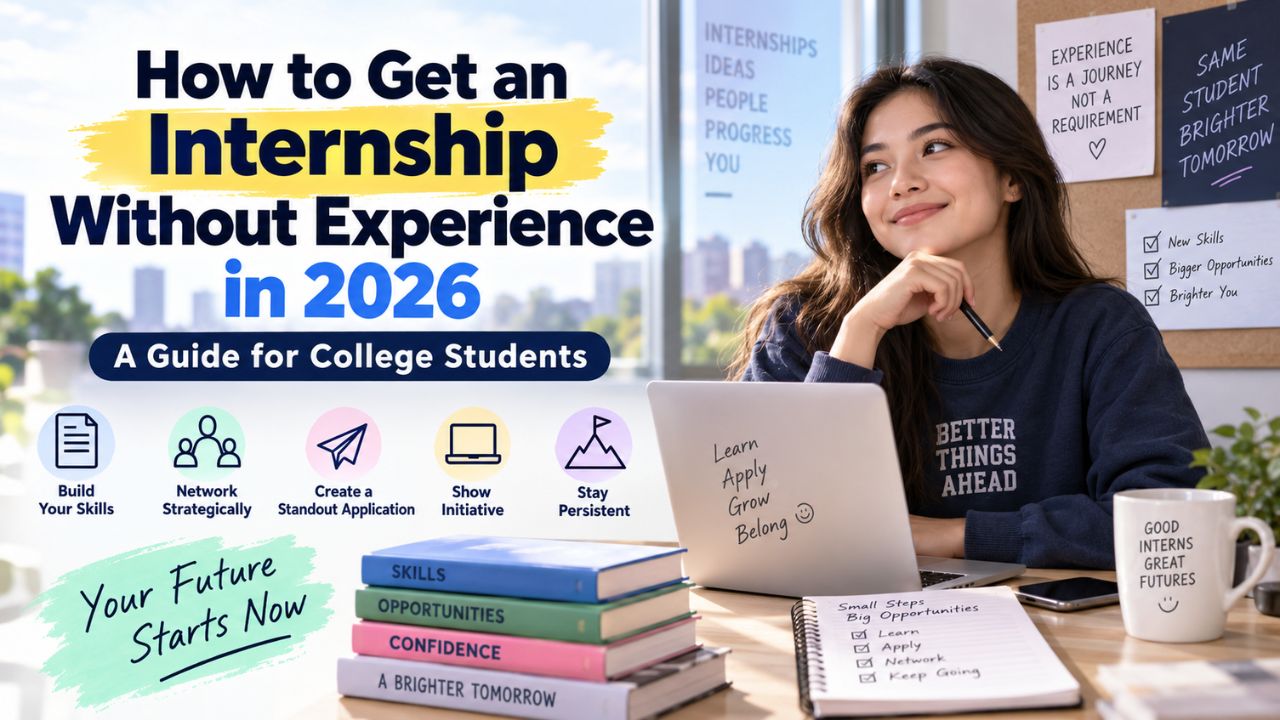
How to Get an Internship Without Experience in 2026: A Guide for College Students
Trying to understand how to get an internship without experience can feel confusing when almost every opportunity asks for skills, projects, or previous work. This is especially common for college students applying for their first internship.
The good news is that you don't need years of professional experience to get started. Recruiters can also evaluate your academic projects, relevant skills, certifications, portfolio, communication abilities, and willingness to learn.
In 2026, a strong internship for college students should help bridge the gap between classroom knowledge and practical application. This guide explains how to build a beginner profile, find suitable opportunities, improve your resume, prepare practical projects, and apply strategically for your first internship.
Quick Answer: Can You Get an Internship Without Experience?
Yes. You can get an internship without previous work experience by demonstrating relevant skills, academic or personal projects, certifications, a focused resume, and genuine interest in the role. Start with beginner-friendly internships and practical projects that allow you to demonstrate what you can actually do.
Table of Contents
- What Does Getting an Internship Without Experience Mean?
- Why Are Internships Important in 2026?
- Who Should Look for Beginner Internships?
- Types of Internships for College Students
- Best Internship Fields in 2026
- Skills and Tools You Should Learn
- Practical Projects and Learning Outcomes
- Key Benefits of an Internship
- How to Choose the Right Internship
- How to Get an Internship Without Experience: Step by Step
- Common Mistakes to Avoid
- Internship vs Course vs Academic Project
- Why Choose StuIntern?
- FAQs
- Conclusion
Quick Highlights
| Factor | What College Students Should Look For |
| Best For | College students, beginners and freshers |
| Mode | Online, remote, hybrid or on-site |
| Skills | Role-specific technical and soft skills |
| Practical Learning | Real-world tasks and problem solving |
| Projects | Portfolio-relevant practical projects |
| Mentorship | Guidance and constructive feedback |
| Certificate | Useful proof of internship completion |
What Does Getting an Internship Without Experience Mean?
Getting an internship without experience means securing a beginner-level opportunity before you have significant formal employment history.
The important distinction is that no work experience does not mean no value.
A college student may already have useful evidence of ability through:
- Academic assignments
- College projects
- Personal projects
- Certifications
- Volunteer activities
- Competitions and hackathons
- Student societies
- Freelance practice
- Technical skills
- Communication and teamwork
For example, a student applying for a digital marketing internship may not have worked for a company before but could demonstrate a sample SEO audit, content calendar, keyword research project, or social media campaign.
Your goal is to give recruiters evidence that you can learn and apply relevant skills.
Why Is an Internship for College Students Important in 2026?
College teaches fundamental concepts, but employers frequently need candidates who can apply those concepts to practical situations.
An internship for college students provides an opportunity to experience deadlines, tools, teamwork, reporting, problem-solving, and professional communication.
It Helps You Build Practical Experience
Instead of only saying that you know a subject, you can show how you have applied it.
It Strengthens Your Resume
A relevant internship gives you practical experience to discuss in future applications and interviews.
It Helps You Understand Career Roles
You might study computer science but still be unsure whether you prefer development, data analytics, cybersecurity, or another field. Practical exposure can help you make a more informed decision.
It Builds Professional Confidence
Completing tasks, receiving feedback, and solving real problems can make the transition from college to professional work less intimidating.
Who Should Choose Beginner-Friendly Internships?
Beginner internships can be particularly useful for:
- First- and second-year college students
- Final-year students
- Students without previous internships
- Fresh graduates
- Students changing career direction.
- Students with theoretical knowledge but limited practical exposure
- Students who need projects for their portfolio
- Students looking to understand a career before graduation.
You do not need to wait until your final semester to start gaining practical exposure.
Starting earlier gives you more time to identify your strengths and improve weak areas.
Types of Internships for College Students
The right internship depends on your schedule, career goals, skills, and preferred learning format.
Online Internships
An online internship for students allows you to gain experience remotely. This can be useful when you cannot relocate or manage regular travel alongside college.
Remote internships can also help develop:
- Online collaboration
- Time management
- Written communication
- Digital tools
- Independent problem-solving
Live-Project Internships
An internship with practical or live projects focuses on applying skills rather than only studying concepts.
For example, instead of simply learning what keyword research means, a digital marketing intern might prepare a keyword map for a website.
A data analytics intern might clean a dataset and build a dashboard rather than only learning definitions.
Skill-Based Internships
These opportunities focus on a specific career skill, such as:
- Data analytics
- Data science
- Digital marketing
- Web development
- Graphic design
- Business analysis
- Content marketing
These can be useful when you already know which career path you want to explore.
Best Internship Fields for College Students in 2026
You should choose a field based on your interests and long-term career direction rather than simply following whichever internship appears first.
| Internship Field | Skills You Can Focus On | Example Beginner Project |
| Data Analytics | Excel, SQL, Power BI, Python | Sales performance dashboard |
| Data Science | Python, statistics, data visualization | Dataset analysis project |
| Digital Marketing | SEO, content, analytics, social media | Website SEO audit |
| Web Development | HTML, CSS, JavaScript | Responsive website |
| Graphic Design | Design principles, visual communication | Brand/social media creatives |
| Business Analysis | Research, Excel, documentation | Competitor analysis |
| Content Marketing | Research, SEO, writing | SEO content plan |
Do not select an internship based only on the certificate. Look at what you will actually learn and create.
Skills and Tools You Should Learn Before Applying
If you have no experience, skills become particularly important.
You do not need to master every tool before applying. Build a solid beginner foundation in the tools commonly associated with your target role.
For Data Analytics
Focus on:
- Microsoft Excel
- SQL
- Power BI or similar visualization tools
- Basic Python
- Data cleaning
- Data visualization
For Digital Marketing
Learn:
- SEO fundamentals
- Keyword research
- Content marketing
- Social media fundamentals
- Google Analytics concepts
- Search Console concepts
For Web Development
Build knowledge of:
- HTML
- CSS
- JavaScript
- Responsive design
- Git/GitHub basics
Soft Skills
Regardless of your field, develop:
- Communication
- Problem-solving
- Time management
- Teamwork
- Research ability
- Presentation skills
The strongest beginner profiles combine relevant technical skills with good communication and a willingness to learn.
Practical Projects: Your Alternative to Work Experience
If your resume has no professional experience section, your projects section becomes extremely important.
Suppose you want a data analytics internship.
Instead of writing:
“Interested in data analytics.”
Build a small project where you clean a dataset, analyze important metrics, create visualizations, and explain your conclusions.
Now you can write something meaningful on your resume, such as:
Sales Data Analysis Project
- Cleaned and organized a sample sales dataset
- Analyzed monthly sales patterns
- Built a dashboard to visualize key metrics
- Presented observations based on the data
This provides recruiters with evidence of applied learning.
The same strategy works across fields.
A digital marketing student can prepare an SEO audit. A developer can create a small website. A designer can build a portfolio. A content student can develop a sample content strategy.
Projects create proof when formal experience is missing.
Key Benefits of an Internship for College Students
A useful internship should provide more than a line on your resume.
Practical Skill Development
You learn how concepts are applied outside textbooks and classroom assignments.
Portfolio Development
Projects completed during your learning journey can give you material to demonstrate your abilities.
Career Exploration
You discover whether a particular field actually matches your interests.
Professional Communication
Internships expose you to feedback, reporting, deadlines, and workplace communication.
Interview Preparation
Practical experience gives you real situations to discuss when interviewers ask about projects, challenges, teamwork, or problem-solving.
How to Choose the Right Internship Program
Do not apply blindly to every available opportunity.
Before selecting an internship, check these factors:
Role relevance: Does the work align with the career you want?
Learning outcomes: Are the skills and tasks clearly explained?
Practical exposure: Will you work on meaningful projects or assignments?
Mentorship: Is there guidance or feedback?
Tools: Will you get exposure to relevant industry tools?
Schedule: Can you realistically balance it with college?
Credibility: Is the organization and opportunity clearly described?
Certificate: If a certificate is offered, understand its conditions and what it represents.
A relevant practical internship is generally more valuable than collecting multiple unrelated certificates.
How to Get an Internship Without Experience: Step-by-Step
Here is a practical process you can follow.
Step 1: Choose One Career Direction
Avoid trying to prepare simultaneously for five unrelated fields.
Pick one starting direction, such as:
- Data analytics
- Data science
- Digital marketing
- Web development
- Business analysis
You can change later, but having a clear initial direction makes your learning and applications more focused.
Step 2: Study Internship Requirements
Search for beginner opportunities in your chosen field and note frequently requested skills.
If several data analytics internships mention Excel, SQL, and Power BI, you have a clear starting point for your learning plan.
Step 3: Build the Basic Skills
Use courses, tutorials, assignments, and practice exercises to understand the fundamentals.
Do not spend months learning without applying anything.
Move quickly from learning to projects.
Step 4: Create 2–3 Relevant Projects
Build small but complete projects that demonstrate practical ability.
Quality matters more than quantity.
Step 5: Create a One-Page Resume
Your beginner resume can include:
- Contact information
- Short professional summary
- Education
- Relevant skills
- Projects
- Certifications
- Achievements
- Volunteer or extracurricular experience
Do not fill your resume with unrelated information just to make it longer.
Step 6: Build a Portfolio
Depending on your field, your portfolio could be:
- GitHub profile
- Personal website
- Design portfolio
- Google Drive project folder
- Data dashboard collection
- Writing portfolio
Make your work easy for recruiters to review.
Step 7: Apply to Relevant Internships
Focus on opportunities that match your current skill level.
Read the internship description carefully and customize your application where appropriate.
Step 8: Prepare for Interviews
Be ready to explain:
- Why you chose the field
- What skills you have learned
- How you built your projects
- Problems you encountered
- How you solved them
- What you want to learn during the internship
If you have no previous experience, your projects can become the core of your interview discussion.
Step 9: Track Your Applications
Maintain a simple spreadsheet containing:
- Company
- Role
- Application date
- Application source
- Status
- Follow-up date
- Interview status
This prevents your internship search from becoming disorganized.
Common Mistakes to Avoid
Applying Without Relevant Skills
You do not need advanced expertise, but you should have basic knowledge relevant to the role.
Sending the Same Resume Everywhere
Prioritize skills and projects that match the specific internship.
Having No Projects
Projects are one of the strongest ways to compensate for limited professional experience.
Applying to Unrelated Roles
If your goal is data analytics, repeatedly applying to unrelated internships may not strengthen the career profile you want to build.
Focusing Only on Certificates
A certificate can document completion, but practical ability matters too.
Ask yourself:
“What will I be able to demonstrate after completing this internship?”
Waiting Until Graduation
You can begin exploring practical learning while you are still in college.
Internship vs Online Course vs College Project
| Factor | Internship | Online Course | College Project |
| Skill Learning | High when practical | High for structured learning | Depends on project |
| Practical Application | Usually strong | Depends on course | Moderate–High |
| Professional Exposure | Stronger | Limited | Limited |
| Mentorship | May be available | Course-dependent | Faculty-dependent |
| Portfolio Potential | High | Depends on assignments | High |
| Career Exploration | High | Moderate | Moderate |
These options do not need to compete with each other.
A good approach can be:
Learn → Practice → Build Projects → Intern → Improve
Why Choose StuIntern for Practical Internship Learning?
Students searching for their first internship should focus on opportunities that connect learning with practical exposure.
StuIntern focuses on internship and practical learning opportunities designed to help students move beyond theoretical knowledge.
Students can explore opportunities relevant to areas such as data science, data analytics, digital marketing, and other career-oriented fields.
When evaluating any StuIntern program, check the current program page for its specific eligibility, mode, projects, mentorship, duration, and certificate conditions before enrolling.
The objective should not simply be to “complete an internship.” It should be to finish with stronger skills, practical work you can discuss, and greater clarity about your next career step.
Frequently Asked Questions
1. Can I get an internship without any experience?
Yes. Many beginner opportunities are designed for students who do not have previous professional experience. You can strengthen your profile through relevant skills, academic projects, personal projects, certifications, volunteering, and extracurricular activities. Focus on demonstrating your ability and willingness to learn rather than worrying about an empty work-experience section.
2. How do I get my first internship in college?
Choose a career field, identify the basic skills required, create two or three practical projects, prepare a focused one-page resume, and start applying to relevant beginner opportunities. When looking for an internship for college students, prioritize learning outcomes and practical exposure over simply collecting certificates.
3. What should I put on my resume if I have no experience?
Include your education, relevant skills, academic or personal projects, certifications, achievements, volunteering, and extracurricular activities. Projects should explain what you created, which tools you used, and what you learned. Avoid inventing professional experience.
4. Which internship is best for college students?
The best internship depends on your degree, interests, skills, and career goals. Look for an opportunity that provides relevant tasks, practical learning, useful projects, feedback, and exposure to the tools used in your target field.
5. Are online internships useful for college students?
They can be useful when they include genuine learning, structured tasks, practical projects, and appropriate guidance. An online internship for students can also be easier to manage alongside college because it removes relocation and commuting requirements.
6. How many projects should I have before applying?
There is no fixed requirement. For many beginner applications, two or three relevant, well-executed projects can be more useful than ten incomplete projects. Choose projects that allow you to demonstrate the skills required for the internship.
7. Do I need a perfect GPA to get an internship?
Not necessarily. Academic performance can matter for some employers and programs, but it is only one part of a student profile. Relevant skills, projects, communication, achievements, and interview performance may also be considered depending on the opportunity.
8. How can I find internships for college students in India?
Start with internship platforms, company career pages, college placement resources, professional networks, and relevant student communities. You can also explore current student-focused internship opportunities through StuIntern and compare programs according to your preferred field and learning goals.
Conclusion
Understanding how to get an internship without experience becomes easier once you stop treating previous employment as the only evidence of ability. Relevant skills, practical projects, a focused resume, and consistent applications can help you build a stronger beginner profile.
The right internship for college students should help you turn academic knowledge into practical experience while giving you projects, skills, and professional situations to discuss in future interviews.
Start with one career direction, build the fundamentals, create evidence of your skills, and then apply strategically.
Ready to gain practical exposure? Explore current internship and learning opportunities on StuIntern and choose a program aligned with your career goals.