

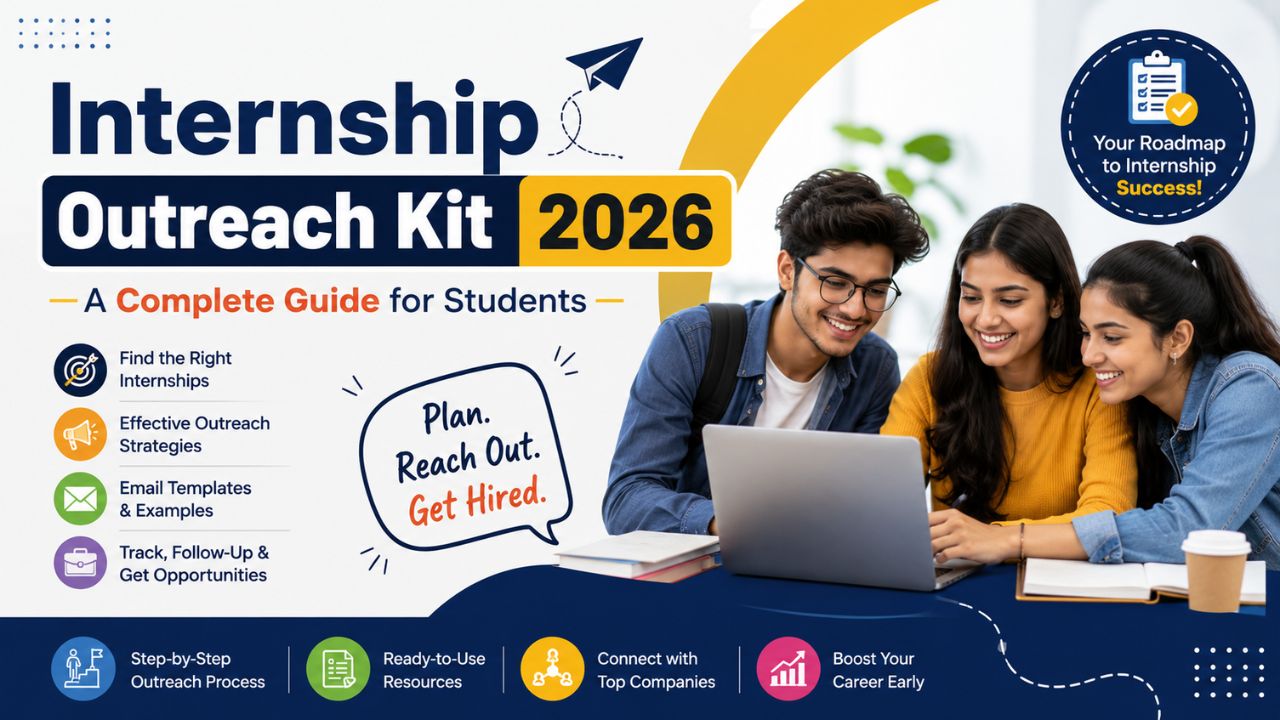
Internship Outreach Kit 2026: A Complete Guide for Students
Finding the right internship can be difficult for students and freshers, especially when they do not know how to approach companies professionally. An internship outreach kit can help students organize their internship search, prepare professional communication, improve their resume, and connect with potential organizations. In 2026, students can use a combination of resumes, LinkedIn profiles, outreach emails, project portfolios, and follow-up messages to improve their chances of getting relevant opportunities. This guide explains what an internship outreach kit includes, why it is useful, how to create one, and how StuIntern can help students gain practical internship experience.
Table of Contents
- What Is an Internship Outreach Kit?
- Why Do Students Need an Internship Outreach Kit?
- What Should an Internship Outreach Kit Include?
- Benefits of an Internship Outreach Kit
- Step-by-Step Internship Outreach Process
- Common Mistakes Students Should Avoid
- Why Choose StuIntern?
- FAQs
- Conclusion
What Is an Internship Outreach Kit?
An internship outreach kit is a collection of professional resources that students can use while contacting companies, recruiters, HR professionals, and internship providers.
A useful kit can include:
- Updated resume
- Cover letter template
- Professional email template
- LinkedIn profile
- Project portfolio
- Introduction message
- Follow-up message
- Internship goals and preferred roles
The purpose is to make internship applications more organized and professional.
Why Do Students Need an Internship Outreach Kit?
Students often apply for internships without preparing their communication or application materials properly. An internship outreach kit helps create a consistent professional profile.
It can help students:
- Present their skills clearly.
- Contact companies professionally
- Save time during applications.
- Showcase projects and certifications
- Follow up with recruiters.
- Track internship applications
For students looking for practical experience, a structured approach can make the internship search more efficient.
What Should an Internship Outreach Kit Include?
| Resource | Purpose |
| Resume | Highlights education and skills |
| Cover Letter | Explains interest in the role |
| Email Template | Professional company outreach |
| LinkedIn Profile | Builds online professional presence |
| Portfolio | Shows practical projects |
| Follow-Up Message | Maintains communication |
Students can also include relevant certifications, academic projects, technical skills, and career interests.
Benefits of an Internship Outreach Kit
A well-prepared internship outreach kit can provide several benefits:
Better Professional Presentation
Students can present their qualifications in a clear and organized way.
Faster Applications
Ready-to-use templates make it easier to contact multiple relevant organizations.
Stronger Portfolio
Projects and practical work can demonstrate skills beyond academic qualifications.
Better Follow-Up
Students can maintain professional communication after submitting an application.
Improved Career Preparation
The process encourages students to understand their skills, interests, and career goals.
Step-by-Step Internship Outreach Process
Step 1: Define Your Internship Goal
Decide your preferred field, role, duration, and learning objectives.
Step 2: Update Your Resume
Highlight relevant education, projects, technical skills, certifications, and achievements.
Step 3: Build Your Online Profile
Keep your LinkedIn profile professional and aligned with your resume.
Step 4: Prepare Outreach Messages
Create short and personalized email and LinkedIn messages.
Step 5: Contact Relevant Organizations
Research companies and internship opportunities that match your career interests.
Step 6: Follow Up Professionally
Send a polite follow-up if you do not receive a response.
Step 7: Track Applications
Maintain a simple record of companies contacted, responses, interviews, and outcomes.
Common Mistakes Students Should Avoid
Avoid these mistakes while using an internship outreach kit:
- Sending the same generic message to every company
- Using an outdated resume
- Not checking spelling and grammar.
- Applying without researching the organization
- Sending incomplete information
- Not following up
- Focusing only on certificates instead of practical skills
Why Choose StuIntern?
StuIntern helps students and freshers explore internships, practical projects, mentor-led training, and career development opportunities. Its platform currently features internship programs in areas such as AI, Digital Marketing, Data Science & Analytics, Full-Stack Development, and HR & People Analytics.
Students can also access live projects, industry-oriented tools, mentor-led learning, verified internship certificates, interview preparation, and career guidance through StuIntern.
Start your internship journey with StuIntern and build practical skills for your future career.
Frequently Asked Questions
What is an internship outreach kit?
An internship outreach kit is a collection of professional resources such as a resume, email templates, LinkedIn profile, portfolio, and follow-up messages used for internship applications.
Why is an internship outreach kit useful for students?
It helps students organize their applications, present their skills professionally, and communicate more effectively with companies.
What should I include in my internship outreach kit?
Include your resume, cover letter, outreach email, LinkedIn profile, portfolio, introduction message, and follow-up template.
Can freshers use an internship outreach kit?
Yes. Freshers can use it to highlight academic projects, skills, certifications, and other relevant experience.
How can I improve my internship applications in 2026?
Focus on practical projects, relevant skills, a strong resume, professional communication, and targeted applications.
Can StuIntern help students find internship opportunities?
Yes. StuIntern provides internship programs, practical projects, mentor-led training, and career-focused learning opportunities.
Conclusion
An internship outreach kit can help students approach internship opportunities with greater preparation and professionalism. A strong resume, portfolio, outreach message, LinkedIn profile, and follow-up strategy can make the application process more organized. However, students should also focus on developing practical skills and gaining project experience. With mentor-led internships, live projects, and career-focused programs, StuIntern can help students move from academic learning toward practical career preparation.