

Introduction
Publishing a research paper in a recognized academic journal is an important goal of PhD scholars, university professors, postgraduate students, and independent researchers. While a research project may take months of investigation, data collection, and analysis, authors need to spend more time properly preparing the paper for journal submission.
Researchers have to select an appropriate journal, present their results convincingly, follow the publication requirements, and ensure that their research is original and properly formatted. For many scholars, this process is complicated by the fact that journal requirements can be quite difficult to understand, especially for someone who has never published their work before.
Scopus and SCI journal publication support can help you learn how to format your manuscript correctly and make it ready for publication. StuIntern offers research editing and publishing support services to help you prepare your manuscript for journal submission, including format, references, methodology, and other requirements.
What Is Scopus and SCI Journal Publication Support?
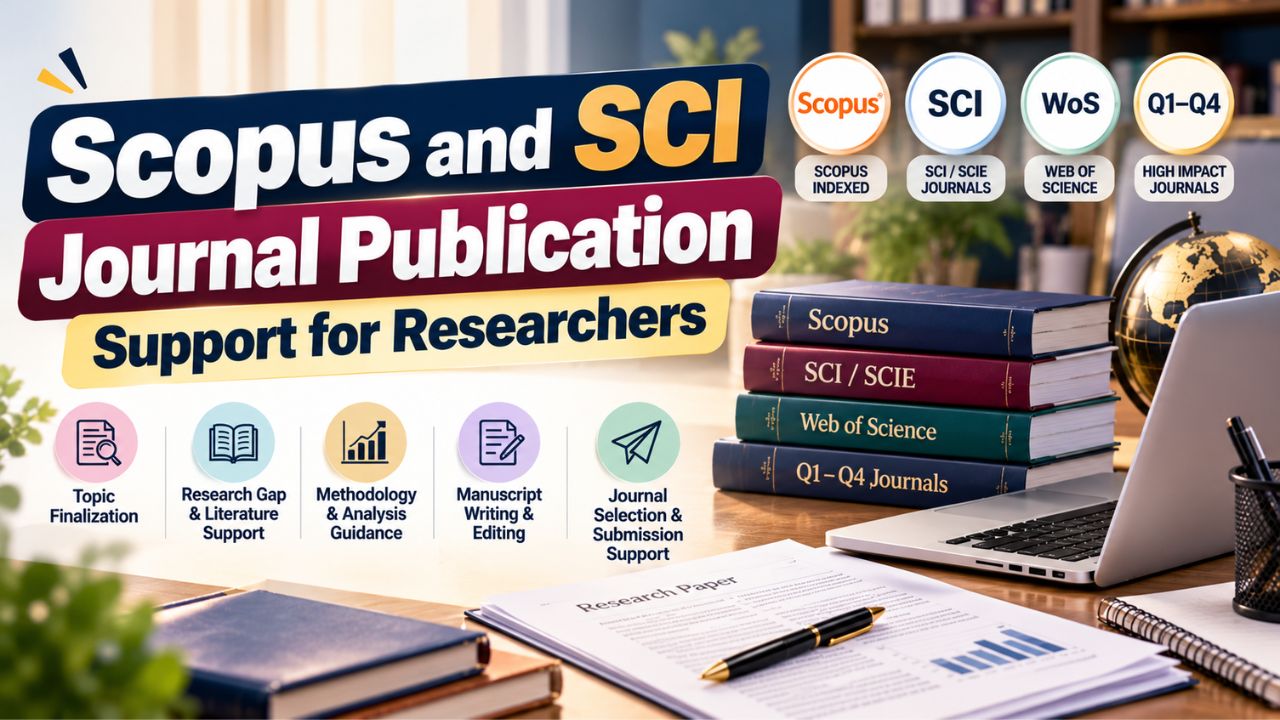
Scopus and SCI journal publication support denotes assistance provided to researchers while preparing and submitting manuscripts to journals indexed in the particular databases.
Since SCI and Scopus are different databases containing lists of journals with specific indexing, it is essential to ensure the target journal’s availability in the desired database.
Based on the researchers’ requests, publication support may include
advice on the structure and organization of the paper,
guidance while preparing a literature review and identifying gaps in the research,
presentation of the research methodology,
analysis and presentation of results and discussion,
editing and proofreading of a manuscript,
formatting of bibliographies and references,
journal selection support,
manuscript preparation and submission,
commenting on the reports from peer-reviewers, and others.
The offered services depend on the companies which provide such support and particular needs of researchers. It is critical to remember that researchers are responsible for their results, conclusions, authorship, and adherence to the journal’s requirements.
Why Do Researchers Need Journal Publication Support?
Preparing a research paper for publication includes various aspects apart from the Introduction and Conclusion. The manuscript must demonstrate the significance of research findings and contain enough detail for the readers and the reviewing committee.
Researchers often face the challenges associated with publication:
Finding the most relevant journal, which will accept the manuscript on the first submission.
Specifying the contribution of the research paper to the general field and describing its benefits in comparison with similar works.
Demonstrating the methodology that was used correctly.
Considering the format requirements established by the journal, such as abstract, headings, layout, language, and many other elements.
Addressing the concerns raised by the reviewers, including changes to the manuscript, additional explanations, and replies to the journal’s comments.
The professional support for research paper publication can assist in analyzing the common problems associated with publishing. The experts will help authors prepare a compelling document and avoid the most prevalent mistakes that lead to the rejection of manuscripts.
How to Choose the Best SCI or Scopus Journal
The journal selection is among the most critical issues in preparing a paper for publication. It is not always possible to choose the appropriate tool on the first try, and multiple rejections can occur before successful submission. The following guidelines will help to identify the best SCI or Scopus journal for the research paper and ensure the rapid acceptance of the manuscript.
1. Matching the Journal With the Research Topic
Read the journal's aims and scope to check if it covers your research topic and method. A journal that publishes studies on the area of investigation is more preferable than the journal with high reputation.
2. Verifying Current Indexing Status
Check the journal indexing on the official Scopus source or Clarivate Master Journal List for SCI-related journals. Avoid relying on promotional statements, third-party lists, or screenshots. The indexing status may change, and researchers should double-check this information to avoid problems with the journal acceptance.
3. Reading/Reviewing Instructions for Authors
Every journal has specific instructions for authors, and the journal's website provides all the information on its submission preparation and process. Check the word limit, abstract requirements, reference list format, table, figures, declaration of interests, and other submission-related instructions.
4. Understanding the Journal's Peer-Review Process
Make sure the journal's requirements match the author's expectations. Most journals offer the information on their editorial and peer-review policies that explain the journal's peer-review process, editorial decision-making, and other policies, including those related to the article processing charges. Bypassing the peer-review process is impossible, and journals or services that offer such options should be avoided.
How to Prepare a Manuscript for Journal Submission
A properly structured manuscript enables the editor to understand the content and the research question. The exact structure depends on the journal and discipline, but most research papers in various journals have similar sections. These include the abstract, introduction, statement of the research gap, literature review, research methodology, results, and discussion.
Research Title and Abstract
The manuscript's title should be informative, while the abstract should state the study's objective, research design, findings, and conclusion in accordance with the journal's word limit and requirements. The key terms should be included as well if the journal requires specific keywords for cataloging purposes.
Introduction and Research Gap Statement
The introduction section describes the research background, objectives, and problem. Usually, the rationale for the study is determined by the research gap, which means that a properly formulated research gap statement is needed for context setting. However, this section should not contain an unsubstantiated assumption that no one has ever studied the research topic. Instead, the research gap should be identified based on the review of the related studies.
Literature Review
The review of related studies allows situating the research paper within the existing scholarship by comparing, contrasting, and evaluating the reviewed studies. The findings of the reviewed studies can be used as evidence, and their limitations should be mentioned to justify the current research. The information in this section should be paraphrased with proper citations to avoid plagiarism.
Research Methodology
The methodology section should describe the research design and data collection and analysis procedures in sufficient detail so that the study can be replicated. The choice of a particular methodology depends on the research objectives, and the selection of a methodology that does not match the research objectives should be avoided.
Results and Discussion
The results section should present the findings of the study in an orderly fashion, using statistical data, text descriptions, graphical visuals, and other relevant data. The interpretation of these results and the comparison with the findings of related studies can be included in the discussion section. The limitations of the current research should also be mentioned here.
References and Formatting
The manuscripts' formatting, tables, figures, and headings should match the requirements stated in the journal instructions for authors. All the cited works should be included in the reference list, and the journal's style should be followed. SCI and Scopus manuscript formatting is essential for the manuscript preparation process.
Common Reasons for Research Paper Rejection
There are several common reasons for rejection, including the following.
The research topic does not match the journal's aims and scope.
The contribution of the study is not strong enough.
The literature review does not provide an adequate context for the research.
The research methodology is not appropriate for the research objectives.
The results are not reported accurately or completely.
The manuscript does not meet the journal's formatting and submission guidelines.
The manuscripts are missing references or have incorrectly formatted citations.
The research paper has issues with ethics or originality.
The research paper can be rejected for various reasons, including having a non-matching research topic and providing insufficient contribution to the field. However, the re-submission should be done after addressing the journal's concerns or choosing another journal.
How to Respond to Journal Reviewer Comments
The peer-review process is an integral part of manuscript submission to a journal. During this process, the journal reviewers provide their comments on the manuscript, and the author should respond to these comments in detail. A proper response to reviewers will enable addressing all their concerns and eliminating the issues they have identified with the manuscript.
When responding to comments, the author should keep in mind that the journal reviewers are experts in the field, and their criticism should not be ignored just because it is unwanted. At the same time, a researcher can argue with the reviewer's points if there is sufficient evidence. Fake edits should be avoided as they may be detected easily, and the manuscript can be rejected.
Keeping track of what changes have been made in the revised manuscript and what responses have been provided to the reviewer's comments is important for efficient response organization.
Benefits of Structured Publication Guidance
The researchers who want to improve the structure and presentation of their manuscript can benefit from publication guidance. It is especially important for those who lack the expertise in this area. The benefits of such guidance include
creating a properly organized manuscript,
identifying the weaknesses in the literature review,
developing strong arguments for the research paper,
editing and proofreading the paper for grammar and citation issues,
aligning the manuscript with the journal's formatting instructions,
and addressing the journal's comments and concerns.
The publication support should not replace the researcher's efforts. The researcher should be able to provide a properly structured and edited manuscript that will meet journal requirements and present the findings effectively.
How StuIntern Supports Researchers
StuIntern offers the range of research-related academic services for Scopus and SCI journal publication support, including manuscript editing, formatting, citation adjustment, literature review, research methodology, research data analysis, and other services. The researcher should identify the support needs and contact the support service that can address these needs.
For efficient support selection, the researcher can provide the details on the research title, abstract, manuscript, journal (if any), and feedback (from a supervisor or journal). By reviewing this information, the publication support service can identify the areas of concern and determine which services are needed. In addition, the researcher should have a clear understanding of the target journal requirements.
The information on the journal aims and scope, author guidelines, and other relevant instructions for authors can be found on a journal's website. The manuscript preparation instructions are usually more detailed for the target journal. The most important thing is to ensure that the manuscript matches the journal requirements for submission.
The publication support service can be chosen based on the researcher's needs. The journal reviewers should have the ability to evaluate the merits of the paper while ensuring that the manuscript conforms to the journal requirements. However, no service can guarantee SCI/Scopus journal inclusion.
Frequently Asked Questions
1. What is Scopus and SCI journal publication support?
It is guidance that may help researchers prepare, edit, format, and organize manuscripts for submission to suitable journals. Support varies by provider and research requirements.
2. How can I select a suitable Scopus journal?
Check the journal's aims and scope, recent publications, author guidelines, editorial policies, and current indexing status through official sources.
3. What is the difference between SCI and Scopus?
SCI-related indexing and Scopus are different indexing systems with different coverage and selection processes. A journal's status should be verified through the relevant official source.
4. Can publication support guarantee acceptance?
No. Acceptance depends on the journal's editorial decision, peer review, research quality, scope, and other factors. Be cautious of guaranteed-publication claims.
5. What should I check before submitting a research paper?
Review the research contribution, methodology, results, references, ethical declarations, formatting, author guidelines, and journal indexing status.
6. Does StuIntern offer SCI and Scopus research support?
StuIntern lists SCI/Scopus paper support and related academic research services. Researchers can visit the official service page to check the available options for their requirements.
Conclusion
Publishing in a suitable journal requires careful preparation, sound research, and an understanding of academic publishing requirements. Researchers should begin with a clear research contribution, choose an appropriate journal, follow its guidelines, and review the manuscript carefully before submission.
Scopus and SCI Journal Publication Support for Researchers can provide useful guidance at different stages of this process. By focusing on research quality, accurate reporting, suitable journal selection, and responsible publication practices, scholars can prepare their manuscripts more confidently.
StuIntern is one option researchers can explore for manuscript preparation and related academic research support while retaining responsibility for their own work.
Website: Stuintern.com
Call / WhatsApp: +91 81308 34430