

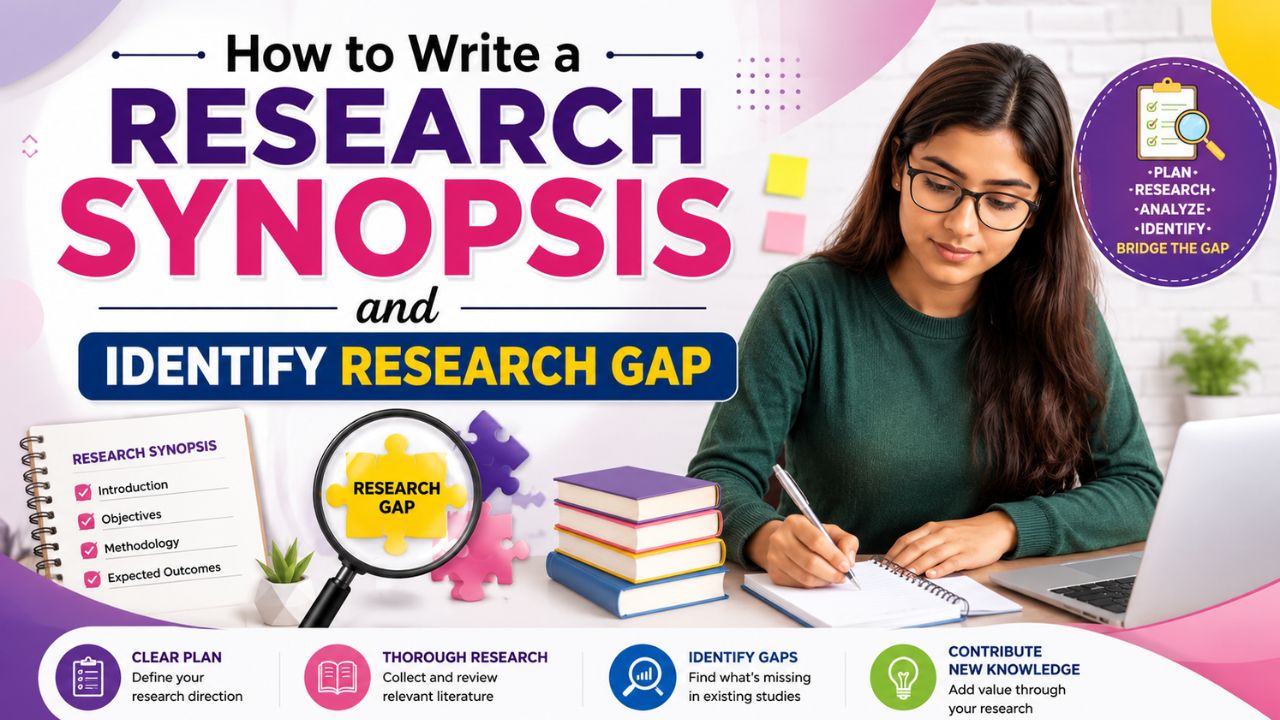
How to Write a Winning Research Synopsis and Identify a Strong Research Gap
Synopsis is the prerequisite part of a thesis, dissertation, or research project. Basically, whatever degree you are aiming for (either Bachelors, Masters, M.Phil., or PhD), your synopsis helps present your research’s aims and objectives. More importantly, it demonstrates your research gap, which basically shows what your study intends to contribute to a specific field of study.
Therefore, if you have a research synopsis to complete, make sure to highlight the relevance and significance of your chosen research topic and demonstrate a strong research gap. The latter criterion is vital since the originality and scope of your research are primarily determined by research gap. Basically, universities and supervisors look at your synopsis to understand the potential of your research endeavor.
Luckily, our experts at StuIntern can assist you with synopsis writing, highlighting research gaps, and developing winning proposals according to the specific requirements set by your university.
What is a Research Synopsis?
A research synopsis is a concise document that presents the overall plan of your research. It provides an overview of your research topic, objectives, methodology, expected outcomes, and significance before the actual research begins.
A well-written synopsis helps:
- Define the research problem clearly
- Explain the importance of the study
- Present research objectives
- Identify research gaps
- Describe research methodology
- Demonstrate feasibility
- Obtain university approval
Think of the synopsis as a roadmap that guides your entire research journey.
Why is a Research Gap Important?
A research gap is an area where existing studies have not provided complete answers or where further investigation is needed. It forms the foundation of original research.
Without identifying a research gap, your study may simply repeat previous work rather than contributing new knowledge.
A strong research gap helps you:
- Create an original research topic
- Develop meaningful research questions
- Justify your study
- Improve publication opportunities
- Increase thesis acceptance chances
- Demonstrate academic contribution
Research literature should always be reviewed carefully to discover these gaps before finalizing a topic.
Components of an Effective Research Synopsis
A high-quality synopsis generally contains the following sections:
1. Research Title
Your title should be:
- Clear
- Specific
- Concise
- Relevant
- Research-focused
Avoid overly broad or vague titles.
2. Introduction
The introduction explains:
- Background of the study
- Current scenario
- Importance of the topic
- Research context
This section prepares readers for understanding the research problem.
3. Problem Statement
The problem statement defines:
- Existing issue
- Research challenge
- Need for investigation
- Research significance
A strong problem statement directly connects to the identified research gap.
4. Literature Review
The literature review summarizes previous studies related to your topic.
Its purpose includes:
- Understanding existing knowledge
- Avoiding duplication
- Comparing previous findings
- Identifying limitations
- Discovering research gaps
Reading recent journal articles is one of the best ways to identify unexplored research opportunities.
5. Research Gap
This section explains:
- What previous researchers missed
- What remains unanswered
- Why further research is needed
- How your study contributes
Examples of research gaps include:
- Lack of recent studies
- Small sample sizes
- Geographic limitations
- Industry-specific gaps
- Technology advancements
- Different population groups
- Contradictory findings
6. Research Objectives
Objectives should clearly explain what your research intends to achieve.
Examples include:
- To analyze...
- To evaluate...
- To compare...
- To identify...
- To examine...
Objectives should be measurable and realistic.
7. Research Questions
Research questions guide the entire study.
They should be:
- Specific
- Clear
- Answerable
- Relevant
Every objective should relate to one or more research questions.
8. Research Methodology
Methodology explains how the research will be conducted.
It includes:
- Research design
- Data collection methods
- Sampling techniques
- Sample size
- Research tools
- Statistical analysis
- Ethical considerations
A well-defined methodology improves the credibility of your research proposal.
9. Expected Outcomes
Mention what your study is expected to contribute.
Examples include:
- Practical recommendations
- New theoretical insights
- Industry applications
- Improved policies
- Future research directions
10. References
Always include references in the required citation style such as:
- APA
- MLA
- IEEE
- Chicago
- Harvard
How to Identify a Genuine Research Gap
Finding a research gap requires systematic analysis rather than guessing.
Step 1: Read Recent Journal Articles
Focus on:
- Scopus-indexed journals
- Web of Science
- Google Scholar
- ResearchGate
- IEEE
- Springer
- Elsevier
Step 2: Analyze Existing Studies
Look for:
- Limitations
- Future recommendations
- Missing variables
- Different populations
- Outdated research
Step 3: Compare Multiple Studies
Ask yourself:
- What topics are repeatedly discussed?
- What issues remain unresolved?
- Which findings conflict?
Step 4: Study Industry Trends
Current industry challenges often reveal valuable research opportunities.
Step 5: Consult Experts
Experienced supervisors and research mentors can validate whether your identified gap is significant and feasible.
Common Mistakes Students Make
Many research proposals are rejected due to avoidable mistakes.
Common errors include:
- Selecting overly broad topics
- Weak literature review
- No research gap
- Poor methodology
- Unrealistic objectives
- Lack of originality
- Incorrect referencing
- Plagiarism
- Weak problem statement
Avoiding these issues significantly improves approval chances.
Benefits of Professional Synopsis Guidance
Preparing a synopsis independently can be challenging, especially for first-time researchers.
Professional guidance helps with:
- Topic selection
- Literature review
- Research gap identification
- Proposal writing
- Research methodology
- Reference management
- University formatting
- Plagiarism checking
- Supervisor revisions
Structured support can save time and improve the quality of your submission.
Why Choose StuIntern for Synopsis and Research Gap Support?
StuIntern provides research assistance across multiple disciplines, helping students develop structured, university-ready research proposals.
Key features include:
- Expert research mentors
- Topic finalization support
- Research gap analysis
- Literature review guidance
- Proposal development
- Research methodology assistance
- Statistical analysis support
- Formatting and referencing
- Plagiarism-free documentation
- Support for UG, PG, M.Phil., and PhD scholars
Their services are designed to help students prepare strong research proposals that align with academic standards and supervisor expectations.
Final thoughts
A good research synopsis is the basis for a thesis or dissertation. It displays your comprehension of the research problem and shows that there is a researchable gap. Additionally, it suggests a viable approach for completing said research.
Therefore, it should come as no surprise that spending time reviewing relevant literature, finding original research gaps, and preparing a synopsis can increase your chances of passing a research project proposal.
Whether you are starting to research your project topic or looking to improve your synopsis, our research experts will help you get there faster and with less effort.
CTA
StuIntern is here to help you in some of the most critical IoT projects. Come to us to receive quality professional assistance in your research paper writing.
Website: www.stuintern.com
Call/WhatsApp: +91 96438 02216